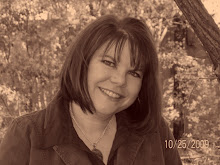
Been a long time gone! (There's a song there ... )
After I returned from North Carolina I got viciously sick with a fever/flu/head cold thing that is still with me. I don't have anywhere near the energy I usually do, and this week was the first week back to school with students. I've missed blogging a lot. Today, after a delightful glass or two of wine last night and after watching Barack's speech in Denver, I feel once again yes, I'll say it, hopeful.
I usually love the first week of school. I adore my students and I adore teaching. I even really like the people I work with, and my department in particular is filled with kind, intelligent, professional people. I am a lucky woman.
But.
This week, partly because I am still not 100% well, but mostly because of a new, obscene, virtual thing that I have no control over, I endured the worst first week of my fifteen year teaching career. What could this be, you say? Yes, we know about silly assessment meetings, and college strategy meetings, and governing board objectives that must be somehow put into your individual performance goals as a faculty member (I still wonder how I'm supposed to enhance facilities management ... but maybe one day I'll figure that one out). We know about making sure you fill out your office hour sheet down to the quarter hour and the challenges of parking on the first week and the lack of coffee and the lines of students who look at you with deep longing to enter your already at capacity classes ... this is to be expected.
But.
This week my institution decided to change its on-line access and student account information and passwords. Let me backtrack. I have also set as a goal (yay performance goals) to use less paper and conserve college resources. We have an on-line course component that is available in all classes, whether they are 100% on line or in the classroom. It makes ecological sense to post handouts and assignments on line and save the mass killing of yellow, blue, and pink colored trees. It makes environmental sense to post syllabi there. Contact information. Helpful hints. Then students have 24/7 access to their courses. They'll never "lose" a handout again, and there is no excuse for a late paper because they can turn it in at any time from the comfort of their own homes.
Here's an excellent example of the difference between theory and practice. I still don't see a flaw in my theory. Colleges use a LOT of paper. Most of it needless. I love trees. I'm a writer. I use a LOT of paper. I need to get my paper-karma back in balance. In practice, however, the world is vastly different.
I'm not afraid of computers. I really love them, actually. I've been a Mac girl for almost two decades. When I'm forced to use a PC (like in the classroom) I steel myself against the inevitable Windows Vista F-U messages and the fatal error messages and the overall slowness of this very clumsy operating system. My computer in my office has Leopard (fast cat!) and is just far more sexy than the PCs in the classroom. But I digress. I do believe technology can help us live more efficiently and consciously.
To a point.
My institution has reached the tipping point, where technology has moved from being a tool to being an inhibitor. We outsourced a project that we've called the "portal". Try to explain to a group of older students whose sole computer experience is maybe sending e-mail (if they don't "lose" the cursor) why they must enter this portal, how to enter this portal, and what they must do when they get there. Try to explain to a group of students how to save their files as Rich Text so that anyone can open them (gosh, are there other word processing programs than wordpad?) Try to explain to a group of students about the free Adobe Acrobat reader so they can read the .pdf files I posted in the class. Try to explain this over and over and over and over and over for the entire first week of school. To five sections. To 85 students. Assign a "test" assignment. Their mission, should they choose to accept it, was to create a text file and attach it to me as a rich text file.
Yeah. I had a handout with directions. Yeah. I believe that writers must know how to use basic technology if they expect to ever sell a book, or a story, or a poem. Everything in publishing is moving electronically. Submissions, rejections, edits, correspondence, contracts. You can't be a computer dork and be a successful writer.
But we are a rural, poor county. Many of my creative writing students are returning students. They did not grow up with computers. They don't know what their browser is. They don't always know what platform they're running. And here they are in college and they have to enter a portal. And I do mean have to. The school did not make this optional. So, here I am, newly forty, trying to explain to people in their 60s and 70s that this is the direction of education. That is isn't very difficult. Please don't be afraid.
I might have been successful with this route, except my school let me down.
Too many users caused system crashes all week. Forced changes in student passwords kept many students from being able to log in. Overloads in calls to our very sweet but relatively small staff of computer help desk employees. Forced upgrades in classrooms which were not completely done so that when instructors tried to show the students how "easy" it was, nothing worked. (Note to tech support: If you're going to install the Adobe Professional Suite, you must LAUNCH it before going away. Otherwise no one can open a PDF file until they first open Photoshop.) You try to find Photoshop on a Vista PC while your whole class is staring at you, wanting only the good old days when they could have a yellow syllabus that they could keep in a notebook. Sigh. I hear the horse and buggy trotting by as I write.
Then, my friend, my favorite browser, Firefox, let me down. You know how aggressive programs can be about downloading the new version. So, most people who use Firefox have been forced to upgrade to the new version whether they wanted to or not. The new version doesn't recognize Rich Text files until you make a change in Preferences. It's an easy change to do, if you know to go do it. The only message Firefox gives you is "unreadable file." So, you've told your classes that anybody can open Rich Text files, and then you find out it's not true. Your beloved Firefox must be fixed first. And did I mention -- about half my students didn't know what their browser was or which one they had.
So, you send group e-mails to all 85 of your students on Thursday about Firefox and how to change the preferences. You thank them for their patience. You apologize for your institution's bizarre choice to implement all these changes on the first week of school. And then half your e-mails get bounced back because something in the "portal" causes many of the e-mails to be returned as undeliverable. I know my students' e-mails are valid. I asked every student on the first week to verify. So I know it's us. I know we're supposed to communicate electronically and I know we're somehow making that impossible. I was able to send e-mails out to everyone prior to the launch of the "portal" on Monday. After Monday, group e-mails had difficulty. So I don't know who received an e-mail and who didn't.
I need more than wine.
Then, one of the "benefits" of the portal (did I mention nothing was broken before -- we could all log on, work, enjoy our days) was that we'd only have to log on once a day. I only logged on once a day before, but hey, whatever. Tech people have to have performance goals too. But now, I have to log in about every 20 minutes. There's an automatic time out that we can't adjust on the system. I'm supposed to be able to log in in the morning, have access to my on -line courses, my e-mail, my rosters, my committee groups -- everything I need to be a happy employee. Theoretically, I have no problem with this concept. Yeah. Theory and practice. Not the same.
This is not just a Laraine-gripe. Up and down the hallowed halls this week, faculty were cursing the portal. In the break rooms, no one could talk about anything else. We stormed the bastille to find out who to send nasty e-mails to. (Ever notice how these institutional changes often have no go-to person?) Students are dropping the classes. The technology is too daunting for some. There are no alternatives in Yavapai county. We are the college for the general population. Students are trying to be patient, but they're up against dial-up connections, old machines, and a lack of time to try and figure out a new system. Yes, we provide computers on campus. No, not 5000 of them. And no, everyone cannot make it to the campus to use these lovely pre-loaded computers. People are even talking about this in Albertson's. A few students told me they overheard people complaining while they were in line at the bank. Yep. It's a small town. But really, this has been a problem.
Ready for the very best -- I mean the seriously, laugh out loud, most hilariously best part of this week? Sit down.
My institution's umbrella goal for 2008-2009 is customer service.
I lift my second glass of wine.
To Customer Service.
Friday, August 29, 2008


Thursday, August 7, 2008
Random Thoughts on Goin' Home


Keith and I got home on Monday after a very long travel day on Sunday. The trip to NC was so fast and furious, I had no time to write except in the airports. We were either in the car going from one place to another, or we were exhausted, or we were visiting with someone (real or ghostly). Turned out both of us were seeking some ghosts back in NC.
We landed in Raleigh/Durham in the evening on July 29. Our rental car was an extremely cute red sports car with a sunroof and a heck of a lot of kick. We got lost finding the hotel, but eventually got in, got settled, and got ready to go to Wilmington the next day. I cried as the plane landed (I'm prone to this). When I saw the tops of the miles and miles and miles of trees and the water, my body responded with water. I still believe NC is the most beautiful place I've ever seen, and if I returned with anything, it was vindication that I was not being whiny and adolescent when we moved to Phoenix in the summer of 1981. The place I left was beautiful, and the place I moved to was not. It would have undone anyone.
On Wednesday, we drove to Wilmington to stay with my aunt, my dad's sister. She's 71, and basically my last blood relative on my dad's side. We spent many summers in Wilmington, as well as Thanksgivings and Christmases. Dad, naturally, was more haunted by Wilmington than I am, but one can't help but be haunted in Wilmington. There's a historical plaque every two feet (pre-Revolutionary historical plaques). Every other house is on the historic register. My aunt and uncle are crazy-wealthy. The wealth that doesn't have to advertise. I thought of a title for a dime-store novel: Thwarted Destiny: My Life in Exile from the Southern Aristocracy. Yes, I was that close to mint juleps at Cape Fear Country Club and dining with the CEOs of everywhere and having a cotillion where everyone wears white and knows what to do with all the forks. (Imagine hand pressed to forehead now). I did my best to get us in the will, but I'm guessing she'll give everything to her children. Alas. We managed to avoid, in our two day visit, trying to explain Keith's and my situation (though she put us in separate rooms), any discussion of God and the afterlife, and any discussion of politics. Everyone did well. Once, Keith began eating before the prayer and my uncle, in his low thunder voice, said, "We will pray now." It was hard not to laugh, but we were at Cape Fear Country Club, after all, and we did have linen napkins, and everyone around us was in pearls discussing the decline that day in the market. We were not in Kansas anymore. One more day in Wilmington and we'd have likely had to venture into religion and politics -- the two threads that dad broke to move us out to AZ -- and it's just better that we avoid those things.
We did have the opportunity to go visit Grandma's house. My cousin owns it now, and he's moved it about 100 yards from its original site down closer to the woods so he can build a bigger home on the lot. It's a beautiful lot (the first picture on the top) that overlooks the inland waterway. The house was used for a time after Grandma's death as Joey's house on Dawson's Creek, and I was told when you google-earth the address, it actually says Joey's house. I haven't done that, but that's just weird. They've redone the entire inside -- very little was familiar except the door handles. It was actually a pleasant house with the windows open, air conditioning, new carpet, and cable. :-) But the fixtures still spoke. I touched all the door knobs and was jolted on my dad's door. The jolt, I think, was the next book, which I can't talk about yet -- not to be secretive, but because it isn't formed enough. Suffice to say, I felt all the suffering that took place in that room, and I felt his ghost still hanging out there, and I felt what an eight year old boy who was stricken with polio and lay in a polio ward for two years watching child after child die felt -- and a voice is coming through, a young boy's voice, which, if you know me at all, is also just weird. :-) But I'm 40 now and many things change.
Holding fast to the "visitors and fish smell in three days" mantra, we left Wilmington on the dawn of day three to go to Charlotte. I grew up in Charlotte, the Queen City, and I have to say I'd move back in a heartbeat. Breathing its air broke apart pieces in me that I'd been pretending weren't there. Seeing its streets and trees and places that were half familiar, but of course have changed in 30 years, pulled me. My contacts don't dry out in NC. I can breathe.
They've moved the road from Wilmington to Charlotte. 74 used to go directly through small town after small town. Now, it bypasses everything except Monroe. We stopped for gas outside Lumberton at a BP station where everyone, including the cashiers, was smoking. AZ has a ban on smoking in any public building, so we don't even have divided sections in restaurants anymore. I'd forgotten how quickly that smoke hurts my head. But we were out of there quickly and on to find a place to eat in Laurinburg, which had a Bojangles, a Jack in the Box, a Wendy's and a Subway. Both Keith and I had been counting the grammatical errors in signage (it's hard to not be English teachers), and Laurinburg won the misplaced apostrophe award. But I digress. We went to Subway, where even there sweet tea was the default (there is a god) and we could see the results of a diet of cheap, fast food. At Cape Fear Country Club, everyone was thin. In Laurinburg, not so much. What a nation, huh?
From Laurinburg, it was only another few hours into Charlotte. I felt like I needed to go by my old house first, so we did that. There was a big dumpster in the driveway, and it was clear someone was repainting the house. I started traipsing around, pointing things out to Keith, when one of the men from inside came out and asked if he could help us. I told him I'd lived there until 1981, and he was very excited. He and his partner had just bought the house as a HUD home and were fixing it up to resell. They invited us inside and told us what they were doing and how they were fixing everything up. I had not expected to be inside that house. I hadn't been inside since we left, and I still don't feel like I can accurately articulate what it felt like to be back in a place that has such a powerful hold on me. These two men are caring for my home, and I can't tell you how that makes me feel. The last time I saw the outside of the house, it was clearly in disrepair, and I'd been hesitant about coming through the old neighborhood at all. I didn't want to supplant my memories with the present. But memory is always shifting, and it shifted again last week. They pulled out the paneling in the den (yes, it was still there!) and took up the tile and are replacing it with sautillo tile. The hardwood floors that are in the rest of the house are still in great shape. They are redoing the bathrooms (mold, water, mildew, etc had caused a lot of damage) and they just replaced the air conditioner that we put in in 1976. The doors were the same doors, and the windows the same windows -- and -- they are repainting it the colors it used to be (beige and deep red). I have no idea where they came up with those colors, but it made being inside that much stranger and that much more comforting. I could really experience the overlapping of time and the layers of experiences that happened within those walls. The men wanted to know what the house used to look like, and they are going to e-mail me pictures when they finish it. I have to say, it's a really cute house (retro, now, I suppose). And although even if I used all three bedrooms' closets, I wouldn't be able to store all my clothes in it, I still fit. I stood in my bedroom where I wrote my first autobiography. I looked out the window where I spent many many days watching the dogwoods and the robins. I stood in the bathroom where dad bathed, and the kitchen where mom watched us playing outside. They're putting in new appliances, of course, and relandscaping, but it was my house, and I was still there, and dad was still there, and mom and my sister, and our old black cat, and it really was like my life there was only moments ago. And maybe it was. I have been emotional around it, but not sad in a debilitating way -- just awed by the passage of time, by how much things change, and by how little. I would have liked more time in the house, but the men were working, and we did have to go to our next place, but I will be forever grateful to these guys for taking care of my house, and for letting me wander back through it and touch it again. Because the house was empty, there was no one else's furniture, pictures, or memories to overlay mine. I could see it exactly as it was, and I could see that it was a happy house, and that it was going to be a happy house again. I can't tell you how grateful I am to these men.
From there, we met my first best friend, Donna, for some Carolina BBQ. She lived across the street from me, and she was the only person to come say good bye to us when we moved. (After we sold our home to a black couple, the neighborhood got nasty). She waved to us on the street, and I remember looking out the back window of the car and watching her crying and waving, and I was crying and waving, and we both knew, even though our parents were sure we'd forget about each other, that there'd never be another friend in our lives like we were for each other -- friends in childhood can't be made at any other time. We talked until almost midnight. She said, "It's so good to talk to someone who you used to roll down the hill with." And she was right. No one knows you like that person. I miss her deeply.
From Charlotte, we drove to Wake Forest, where Keith went to school, stopping along the way in Statesboro to have yet more Carolina BBQ (this week I'm cleansing with rice, beans, broccoli, detox tea ... but it was SO worth it) Wake Forest is a very beautiful school. Dad went there for two years before he transferred to UNC Chapel Hill. Keith got to wander around his classrooms and see his old dorms before the daily 3 pm storm struck. We stopped on the way back to Raleigh at 1.2 million square feet of retail space just outside of Durham (not kidding). It was a tax-free weekend for back-to-school purchases, and, well, you know me. Fortunately, we only had a few hours or I'd have had to pay to send my suitcase back on the airplane. :-)
We arrived in Phoenix late on Sunday night, and then drove back to Prescott on Monday. I turned 40 on Tuesday and now I'm just trying to put all this together somehow. Multiple books floated in front of me on the trip. Finishing Gathering Ghosts before I went back home was crucial to that. I was cleared of that baggage and could move into the next right thing in front of me, rather than behind me. I do see more ghosts in the south than the west. I do hear more voices and I do feel more authentically myself there. (Born with a magnolia in my hair!) I don't know where this will take me. I only know I need to go back more frequently, and stay longer in one place. I will look into writer's retreats and colonies in the south, or places I can go to just listen, watch the squirrels, taste the tomatoes.
Everything is different, and nothing is different. Walking in my old house freed my 7 year old ghost. I felt her move, and I have felt different since being back in Prescott. I gathered her up, and we'll make the next step in our journey together.
Pictures (from top left)
1) The view from Grandma's house in Wilmington
2) me on Wrightsville Beach
3) me and my first best friend, Donna, in front of a Carolina BBQ place (it's the vinegar in the BBQ that makes it the best food EVER) in Charlotte
4) a painting I remembered from childhood. This was inside Christ Lutheran Church, the church where I grew up. It has since become a mega church, but they had kind of a shrine to the "old" sanctuary, which is what I remember, and this painting was there. It was commissioned by the Eck family, whose son Robbie, was a few years older than me. He was killed in a car accident when he was 12. Robbie's was the first funeral I ever went to.
5) me inside the kitchen of my old house in Charlotte
6) view of Springfield Drive, the street I grew up on
7) me in front of the house in Charlotte
8) me at Wake Forest (where Keith went to school)
Monday, July 28, 2008
Goin' Home
Tomorrow I am going home. I haven't been home in many, many years. This trip feels like the first trip home I will be taking as an adult. There is no "homeplace" anymore. My aunt still owns my grandmother's house, but right now no one lives in it. My aunt and uncle don't live in the house I remember anymore. Our family's home in Charlotte has been sold many times in the twenty-seven years since we lived there. No one from the family attends Masonboro Baptist Church anymore (my dad's old church), and no one from the family attends Christ Lutheran Church anymore (my mother's church).
I understand Christ Lutheran has become a mega-church now. I remember a small chapel surrounded by cherry trees that always produced the most holy cherry blossoms every spring. I remember a kind pastor, Jacob Lackey, who only recently passed away. He helped my mother through 1979, a year I imagine was one of the most difficult ones of her life. I remember the enthusiasm my mother had for teaching Bible school classes. She loved the Bible stories, and she was a wonderful reader, so she could enthrall even the most hyperactive seven year old with her rendition of Noah's Ark. I remember the song ... "The animals, the animals, they came in by two-sy two-sies..." We'd go to Bible school in the summer, probably around this time of year, in the mornings, and then go to the pool in the afternoons in Matthews. Keith and I are staying in a hotel near that pool, and near our old house.
I wish the trip were both longer and over. I know I am going back a stranger, both to my family and to my place. I think, though we'll see when we get there, that for the first time I'm not going back hoping to find something. It feels more like going back to acknowledge something -- to acknowledge the foundation of my life. Am I capable of going back without attachment to wanting things to be different?
My dad and I went back two years after we moved to North Carolina. It was the only trip we took alone together. I remember standing in a field, all sorts of tiny bugs circling around me. I had my back to him because I didn't want him to see my crying over something as unexplainable as the earth. I felt that same reaction when I went to New York earlier this summer. Something in the dampness, the scurrying of all creatures great and small in the trees, along the creeks, within the blades of grass, still touches something primal in me. My land. My small part of the earth that my cells still recognize as being the first climate of this incarnation.
I want to go home as an adult. I want to go home without the shadow of being Glenn Jr's oldest. I want to be both a visible and invisible ghost in the places I used to know. If I see anything left of me there, I want to gather her up, wrap her carefully in a cotton blanket (because godknows it's gonna be hot), and bring her back to Prescott with me.
July 24, 1976 was the date my dad had his heart attack. This week, thirty-two years ago, was the week my sister and I were sent to Wilmington while everyone tried to figure out if dad was going to live or die. I'll be staying with my aunt, his sister, just like I did then, only I stayed in a house they owned three houses ago, and I didn't really know then what was going on. I can't claim that I know what's going on now, except this time I know I can't go home again. There is no home. There's not even a home in Phoenix. The house the four of us lived in has been sold. Everywhere I stay with family I am a guest. My "room" does not exist except in my own house in Prescott. Perhaps that's as it should be. If I'd have had a place to go back to, with a bed I remembered, posters on the walls, cassettes stacked beside an old tape player, I might never have moved forward, so attached am I to staying in one place. Better, perhaps, that there was no option for that. I'm going to see my best childhood friend in Charlotte. Our lives have taken very different paths. She's a single mother with three boys. We talked on the phone last week like I never moved away.
I went to Phoenix on Saturday for my family birthday dinner, and in the morning I stopped to see my two friends, Mike and Arvin, whom I have known since 1986. Arvin made the comment that no matter who comes into our lives at this point, no one will ever know us in the way that we know each other. It's true. I can tell people about my friendships in North Carolina, or about these two men and what we have meant to each other, but I can't go back to being 12 or 21 or anywhere in between. I am left with the idea of piecing together a home from the remnants of different homes and remnants of different people I've been.
This time, I don't feel like I'm going back looking for myself. I feel like I will walk up and down Springfield Drive with both love and detached curiosity. (A great way to approach writing, by the way!) I hope I can see the neighborhood as it is without the rose colored glasses. I hope I can see it without wanting it to be something else. I've met the ghost of my father on every trip back since he died. I'm not expecting to meet him there anymore. I don't think he needs to be there waiting for me. I think he knows now that I am OK and he can complete his arc without wondering what's going to happen to me. I don't know who I'll meet hanging in the trees or walking down the streets. Maybe the ghosts of the south are silent for me now. Maybe they'll give me permission to listen to the ghosts of the west. Or maybe not. Ghosts are quite possessive! No doubt I'll come back with stories. No doubt I'll come home with something that haunts me still. No doubt I'll come back having eaten too much pork and watermelon.
Huh. Hear what has happened? Prescott has become home. I'm planting roots here. Maybe I'll bring back a little sand from Wrightsville Beach to pack around them. Maybe I'll bring back an acorn. I am a visitor now, in a place that was once as familiar as my own body. It may well be another fifteen years before I get back to NC again. It's a long way, and the plane won't take me where I'd really like to go, so Charlotte and Wilmington become places that used to be mine. I can go back and look, but I can't touch anymore. They're not reaching back to me.
So, I'll have some sweet tea and damn fine tomatoes and corn on the cob and I'll come back to Arizona and keep working on my novel, and keep working on opening my body and my heart, and I'll try to merge my southern girl with my southwest girl and see what ghosts show up for me then. Blended families are the way of things anyway, aren't they?
Have a good week, ya'll.
I understand Christ Lutheran has become a mega-church now. I remember a small chapel surrounded by cherry trees that always produced the most holy cherry blossoms every spring. I remember a kind pastor, Jacob Lackey, who only recently passed away. He helped my mother through 1979, a year I imagine was one of the most difficult ones of her life. I remember the enthusiasm my mother had for teaching Bible school classes. She loved the Bible stories, and she was a wonderful reader, so she could enthrall even the most hyperactive seven year old with her rendition of Noah's Ark. I remember the song ... "The animals, the animals, they came in by two-sy two-sies..." We'd go to Bible school in the summer, probably around this time of year, in the mornings, and then go to the pool in the afternoons in Matthews. Keith and I are staying in a hotel near that pool, and near our old house.
I wish the trip were both longer and over. I know I am going back a stranger, both to my family and to my place. I think, though we'll see when we get there, that for the first time I'm not going back hoping to find something. It feels more like going back to acknowledge something -- to acknowledge the foundation of my life. Am I capable of going back without attachment to wanting things to be different?
My dad and I went back two years after we moved to North Carolina. It was the only trip we took alone together. I remember standing in a field, all sorts of tiny bugs circling around me. I had my back to him because I didn't want him to see my crying over something as unexplainable as the earth. I felt that same reaction when I went to New York earlier this summer. Something in the dampness, the scurrying of all creatures great and small in the trees, along the creeks, within the blades of grass, still touches something primal in me. My land. My small part of the earth that my cells still recognize as being the first climate of this incarnation.
I want to go home as an adult. I want to go home without the shadow of being Glenn Jr's oldest. I want to be both a visible and invisible ghost in the places I used to know. If I see anything left of me there, I want to gather her up, wrap her carefully in a cotton blanket (because godknows it's gonna be hot), and bring her back to Prescott with me.
July 24, 1976 was the date my dad had his heart attack. This week, thirty-two years ago, was the week my sister and I were sent to Wilmington while everyone tried to figure out if dad was going to live or die. I'll be staying with my aunt, his sister, just like I did then, only I stayed in a house they owned three houses ago, and I didn't really know then what was going on. I can't claim that I know what's going on now, except this time I know I can't go home again. There is no home. There's not even a home in Phoenix. The house the four of us lived in has been sold. Everywhere I stay with family I am a guest. My "room" does not exist except in my own house in Prescott. Perhaps that's as it should be. If I'd have had a place to go back to, with a bed I remembered, posters on the walls, cassettes stacked beside an old tape player, I might never have moved forward, so attached am I to staying in one place. Better, perhaps, that there was no option for that. I'm going to see my best childhood friend in Charlotte. Our lives have taken very different paths. She's a single mother with three boys. We talked on the phone last week like I never moved away.
I went to Phoenix on Saturday for my family birthday dinner, and in the morning I stopped to see my two friends, Mike and Arvin, whom I have known since 1986. Arvin made the comment that no matter who comes into our lives at this point, no one will ever know us in the way that we know each other. It's true. I can tell people about my friendships in North Carolina, or about these two men and what we have meant to each other, but I can't go back to being 12 or 21 or anywhere in between. I am left with the idea of piecing together a home from the remnants of different homes and remnants of different people I've been.
This time, I don't feel like I'm going back looking for myself. I feel like I will walk up and down Springfield Drive with both love and detached curiosity. (A great way to approach writing, by the way!) I hope I can see the neighborhood as it is without the rose colored glasses. I hope I can see it without wanting it to be something else. I've met the ghost of my father on every trip back since he died. I'm not expecting to meet him there anymore. I don't think he needs to be there waiting for me. I think he knows now that I am OK and he can complete his arc without wondering what's going to happen to me. I don't know who I'll meet hanging in the trees or walking down the streets. Maybe the ghosts of the south are silent for me now. Maybe they'll give me permission to listen to the ghosts of the west. Or maybe not. Ghosts are quite possessive! No doubt I'll come back with stories. No doubt I'll come home with something that haunts me still. No doubt I'll come back having eaten too much pork and watermelon.
Huh. Hear what has happened? Prescott has become home. I'm planting roots here. Maybe I'll bring back a little sand from Wrightsville Beach to pack around them. Maybe I'll bring back an acorn. I am a visitor now, in a place that was once as familiar as my own body. It may well be another fifteen years before I get back to NC again. It's a long way, and the plane won't take me where I'd really like to go, so Charlotte and Wilmington become places that used to be mine. I can go back and look, but I can't touch anymore. They're not reaching back to me.
So, I'll have some sweet tea and damn fine tomatoes and corn on the cob and I'll come back to Arizona and keep working on my novel, and keep working on opening my body and my heart, and I'll try to merge my southern girl with my southwest girl and see what ghosts show up for me then. Blended families are the way of things anyway, aren't they?
Have a good week, ya'll.
Monday, July 21, 2008
This Man, This Girl, and This Boy
In 2005, I wrote this essay about Keith & his kids:
I’m in love with a man who has children. The one non-negotiable piece of my yahoo personal ad: no kids. Mounting debt, a gambling addiction, a 70-hour work week at McDonald’s, purple boils on his face – all were preferable to children.
This isn’t a new aversion. Dolls seemed like a complete waste of time to me as a girl. They weren’t real (which, now that I think about it, is a bonus), but why would you pretend they were real when you could read a book and pretend you walked through the closet door into Narnia? In high school home ec, girls carried around eggs wrapped in baby blankets for a week so they could see what motherhood would be like. I never heard of one of those eggs screaming at 3 a.m. or vomiting up the strained peas you just got down its throat all over your $75 white silk shirt. If you did drop the egg, you only broke an egg. CPS wouldn’t come. Your mother wouldn’t shame you for the next dozen years about your irresponsibility. If you forgot your egg in your locker, it would still be there in the morning, in the exact same shape as when you left it. Not like motherhood at all. At work, women would bring in their newborns and their breast pumps and expect that every female on the floor would hold the baby. I hid in the bathroom as much as possible, but if there was no escaping holding it, I held it as far away from my body as I could – this child and I staring at each other – asking each other, “Are we from the same species?”
In my mid-twenties, I stopped feeling guilty over not goo-gooing over ga-gaaing tiny people and surrendered to the inevitability that if I lived in the wild, I would be the aberration who ate her young. I would be the exception that proves the rule. I’m an English teacher, after all, so exceptions to rules are really no issue for me. I am finally old enough to where very few people expect one of those tiny creatures to come crawling out of my body. I freely admit that I don’t get it. I don’t understand the love a parent has for a child. I don’t understand why it is supposed to be superior to the love I feel for myself, my friends, my cats or my planet. I don’t think it is. But I’ve learned many clever responses over the years to the inevitable question, “When are you going to have children?” The best and most effective shut down seems to be the most honest one. I don’t like children, at which point the mother who asked the question promptly shepherds her flock of drooling sticky people out of arm’s reach, as if she thought I would devour them on the spot as a final emphasis to my comment.
It’s still true. I don’t like children. I don’t regret not experiencing childbirth, or nursing, or first days of kindergarten. But, as things go, I met this man, and he had two children, but he also had a cat, and men who prefer cats to dogs are rare enough, and Prescott is small enough that I thought he was worth talking to. We kept talking, and of course, the time came next when I had to meet the children.
I met them on a sleety Sunday in March at the Dinner Bell. They were very blonde. I had no idea what to say to them. They brought a gift of bath salts for taking care of their cat while they were away on spring break to San Diego. I’d been sick during spring break, missing this man, worrying about meeting his children. When I met the man my mother married after my father died, I was furious. How could my mother love someone else? I was 22 then. These children are 8 and 11. Maybe divorce is different. After all, they’ve still got both parents. During breakfast I watched this man with these children. I watched them hold on to him, kiss him, share their food with him. I saw them love him and I saw a side of him I hadn’t seen before.
They spit their gum out in his hands. He and the boy recited parts of Jabberwocky to each other. He and the girl worked on math problems in crayon on the children’s menu paper place mat. He wanted them to like me. I wanted them to like me. I wanted them to not be threatened by me or feel like I was going to try and be their mother.
The most intelligent thing I could think of to say was, “What was your favorite memory from San Diego?” I am a stupid adult, I thought. I suddenly realized why adults had always commented on how much I had grown or asked me what school was like – but how to explain to a grown up what middle school was like? I shuddered at the memory and swore never to let that question cross my lips. But it did, in a slightly more or less egregious way. “What is your favorite subject in school?” English for the girl. Science for the boy. Ask open ended questions. I didn’t know what to say. The girl asked if she could eat my toast. The boy asked to see my ring. The man told me they liked me. How could he tell? I knew they wanted their mom and dad back together. What kid wouldn’t? I knew I was in the way of that. I didn’t even know this man very well yet. I just knew, then, that he had something I hadn’t seen in a long time – the capacity to open his heart.
It’s been awhile now. I spent a day last summer sweating at the water park in Phoenix because the children wanted to go. I watched them wade through a creek on slippery rocks (which, had I been their mother, I’d have never let them do) until the girl found a candleholder shaped like a sunflower and brought it back to me for a gift. The girl wrote poems about me. The boy stole my sandal one night while I was in bed with the man and hid it under the sink. The boy hit me in the eye by accident with a ball he was hitting in the house. He really likes you, said the man.
So the relationship with the man became more than a relationship with him. I realized I loved his kids. One night the boy cried and told me what divorce felt like. He said it felt like the north pole became the south pole, and I didn’t know what to say, but I felt like whatever I said suddenly had infinitely more weight than anything I’d ever said before. I said his mom loved him and his dad loved him and that meeting him and the girl was one of the best things that ever happened to me. When we came out of the bedroom, the boy and I, I saw the man making nachos in the kitchen and the girl grating cheese and I saw what I never thought I’d see in my life. A family.
Last weekend all four of us crawled in bed. The boy wanted to listen to Simon & Garfunkel. His favorite was Bridge over Troubled Water. Her favorite was Scarborough Fair, although none of us could explain to her what it meant. The man and I were in the middle of the bed. The girl was holding on to me and the boy was holding on to the man.
I remembered listening to Simon & Garfunkel in high school, wearing all black with heavy kohl eyeliner and combat boots. We smoked dope and drank cheap wine coolers and lamented the decline of the intellectual. We needed an Ayn Rand for our generation. We thought the 60’s held all the answers. The 80’s were, in our words, tragic.
Two years before my father died, Simon & Garfunkel meant the end of everything, the end of my family. I sat in the circle of the other National Honor Society nerds choking on the pot smoke I never could inhale embracing embracing embracing the sorrow that was coming just around the next corner. Sorrow so close I could smell its rotten teeth.
The comfort I pretended I could have through sad folk songs worked. I didn’t forget the sorrow, but I did forget the deeper thing I was pretending until this moment. I was pretending I didn’t want a family again, pretending that when that sorrow hit that was inches inches from the door, that from that moment on it didn’t matter that I would never have a family.
The man shifted beside me, pressed his head against my neck. “I love you,” I said to the top of his head. He is the man I love in part because of these children, and I feel for the first time in my life that I can close my eyes and rest with my family: this man, this girl, and this boy.
______________________________________________________________________________________
Tonight, in July of 2008, after over three and a half years together, we told his children that we were making a commitment to each other. The girl is 14 now, starting high school in two weeks. The boy is almost 12, about to begin the adventure that is middle school. When we told them, they shrieked, leapt off the floor and hugged each other, tears forming in both kids' eyes. They went to their dad, then to me, hugging, hugging, hugging.
"I've got a new step-mom!" said the girl, (something usually not shouted with glee) and somehow everything felt much more real than it had over the weekend when Keith and I made a commitment to each other in Jerome. She immediately went to text message everybody.
"Thank you, Dad," said the boy, hugging his father. "Are you happy?"
"I am," said Keith.
I don't know what I expected. I knew they liked me. I knew I loved them. I knew I'd heard all my life it's different when you make a commitment, but I didn't really believe it -- I guess because I never have made a commitment before to anything but writing. I felt another crack separate and break off and dissolve in my heart. I would be seeing these children graduate from high school, get married (or not), go to college, have lives. I could really let myself love them.
The girl wants to make the invitations. The boy wants to play the wedding song on his new electric guitar. They want us to dance to "Jessie's Girl", the song we danced to on i-tunes on the first New Year's Eve the four of us spent together. The girl's boyfriend texts back his congratulations.
Keith and I sit outside while the girl shops for shoes on Zappos (yeah, I've been teaching her), and the boy takes a shower. We can see Jupiter from the porch. We had a bit of rain today, and the air is damp and cooler. We talk about what the ceremony will look like. We talk about what to call each other (there really is no word ... if you're not husband/wife, what are you?) We decide to be husband/wife anyway. We need to figure out what legal paperwork to draw up for power of attorney. We talk about a party. Writing things to say to each other.
When I first moved to Prescott, I went out to Goldwater Lake and walked around its edges. There's a small footbridge off to one side, and I sat there for a long time enjoying the sound of real water making noises. Phoenix had no such talking water. I sat on the bridge in January in the sun. The lake was full. Patches of snow were on the trail. And I wished for Keith. I didn't know I wished for Keith, but I told the universe that I was ready to do the work of relationship. I asked for a companion. I met Keith a few weeks later.
We think maybe we'll do the ceremony at Goldwater Lake by that footbridge. I say good-night to the boy and the girl. "We love you!" they say, and then return to their cell phones or books.
"Love you, too," I say.
And it's true. And I didn't have to go through childbirth, or diapers, or vomiting, or sleepless nights with infants. Someone else did that for me. When I met them they were already people. They could eat on their own. They could walk. They could sleep alone. Now they seem to be almost grown. They say some of the wisest things I've ever heard. I had nowhere near their depth at their age. How cool that I'm going to get to spend my life with them.
"That was weird," I say to Keith when we get to the car. I'm still working with "step-mom" in my head. I'm realizing that it's very hard to not move forward now that we've told everyone. I don't want to not move forward, but I'm realizing, yes, mom was right, it is different when you make a commitment.
"I choose you," says Keith.
"I choose you, too," I say.
And I do.
I’m in love with a man who has children. The one non-negotiable piece of my yahoo personal ad: no kids. Mounting debt, a gambling addiction, a 70-hour work week at McDonald’s, purple boils on his face – all were preferable to children.
This isn’t a new aversion. Dolls seemed like a complete waste of time to me as a girl. They weren’t real (which, now that I think about it, is a bonus), but why would you pretend they were real when you could read a book and pretend you walked through the closet door into Narnia? In high school home ec, girls carried around eggs wrapped in baby blankets for a week so they could see what motherhood would be like. I never heard of one of those eggs screaming at 3 a.m. or vomiting up the strained peas you just got down its throat all over your $75 white silk shirt. If you did drop the egg, you only broke an egg. CPS wouldn’t come. Your mother wouldn’t shame you for the next dozen years about your irresponsibility. If you forgot your egg in your locker, it would still be there in the morning, in the exact same shape as when you left it. Not like motherhood at all. At work, women would bring in their newborns and their breast pumps and expect that every female on the floor would hold the baby. I hid in the bathroom as much as possible, but if there was no escaping holding it, I held it as far away from my body as I could – this child and I staring at each other – asking each other, “Are we from the same species?”
In my mid-twenties, I stopped feeling guilty over not goo-gooing over ga-gaaing tiny people and surrendered to the inevitability that if I lived in the wild, I would be the aberration who ate her young. I would be the exception that proves the rule. I’m an English teacher, after all, so exceptions to rules are really no issue for me. I am finally old enough to where very few people expect one of those tiny creatures to come crawling out of my body. I freely admit that I don’t get it. I don’t understand the love a parent has for a child. I don’t understand why it is supposed to be superior to the love I feel for myself, my friends, my cats or my planet. I don’t think it is. But I’ve learned many clever responses over the years to the inevitable question, “When are you going to have children?” The best and most effective shut down seems to be the most honest one. I don’t like children, at which point the mother who asked the question promptly shepherds her flock of drooling sticky people out of arm’s reach, as if she thought I would devour them on the spot as a final emphasis to my comment.
It’s still true. I don’t like children. I don’t regret not experiencing childbirth, or nursing, or first days of kindergarten. But, as things go, I met this man, and he had two children, but he also had a cat, and men who prefer cats to dogs are rare enough, and Prescott is small enough that I thought he was worth talking to. We kept talking, and of course, the time came next when I had to meet the children.
I met them on a sleety Sunday in March at the Dinner Bell. They were very blonde. I had no idea what to say to them. They brought a gift of bath salts for taking care of their cat while they were away on spring break to San Diego. I’d been sick during spring break, missing this man, worrying about meeting his children. When I met the man my mother married after my father died, I was furious. How could my mother love someone else? I was 22 then. These children are 8 and 11. Maybe divorce is different. After all, they’ve still got both parents. During breakfast I watched this man with these children. I watched them hold on to him, kiss him, share their food with him. I saw them love him and I saw a side of him I hadn’t seen before.
They spit their gum out in his hands. He and the boy recited parts of Jabberwocky to each other. He and the girl worked on math problems in crayon on the children’s menu paper place mat. He wanted them to like me. I wanted them to like me. I wanted them to not be threatened by me or feel like I was going to try and be their mother.
The most intelligent thing I could think of to say was, “What was your favorite memory from San Diego?” I am a stupid adult, I thought. I suddenly realized why adults had always commented on how much I had grown or asked me what school was like – but how to explain to a grown up what middle school was like? I shuddered at the memory and swore never to let that question cross my lips. But it did, in a slightly more or less egregious way. “What is your favorite subject in school?” English for the girl. Science for the boy. Ask open ended questions. I didn’t know what to say. The girl asked if she could eat my toast. The boy asked to see my ring. The man told me they liked me. How could he tell? I knew they wanted their mom and dad back together. What kid wouldn’t? I knew I was in the way of that. I didn’t even know this man very well yet. I just knew, then, that he had something I hadn’t seen in a long time – the capacity to open his heart.
It’s been awhile now. I spent a day last summer sweating at the water park in Phoenix because the children wanted to go. I watched them wade through a creek on slippery rocks (which, had I been their mother, I’d have never let them do) until the girl found a candleholder shaped like a sunflower and brought it back to me for a gift. The girl wrote poems about me. The boy stole my sandal one night while I was in bed with the man and hid it under the sink. The boy hit me in the eye by accident with a ball he was hitting in the house. He really likes you, said the man.
So the relationship with the man became more than a relationship with him. I realized I loved his kids. One night the boy cried and told me what divorce felt like. He said it felt like the north pole became the south pole, and I didn’t know what to say, but I felt like whatever I said suddenly had infinitely more weight than anything I’d ever said before. I said his mom loved him and his dad loved him and that meeting him and the girl was one of the best things that ever happened to me. When we came out of the bedroom, the boy and I, I saw the man making nachos in the kitchen and the girl grating cheese and I saw what I never thought I’d see in my life. A family.
Last weekend all four of us crawled in bed. The boy wanted to listen to Simon & Garfunkel. His favorite was Bridge over Troubled Water. Her favorite was Scarborough Fair, although none of us could explain to her what it meant. The man and I were in the middle of the bed. The girl was holding on to me and the boy was holding on to the man.
I remembered listening to Simon & Garfunkel in high school, wearing all black with heavy kohl eyeliner and combat boots. We smoked dope and drank cheap wine coolers and lamented the decline of the intellectual. We needed an Ayn Rand for our generation. We thought the 60’s held all the answers. The 80’s were, in our words, tragic.
Two years before my father died, Simon & Garfunkel meant the end of everything, the end of my family. I sat in the circle of the other National Honor Society nerds choking on the pot smoke I never could inhale embracing embracing embracing the sorrow that was coming just around the next corner. Sorrow so close I could smell its rotten teeth.
The comfort I pretended I could have through sad folk songs worked. I didn’t forget the sorrow, but I did forget the deeper thing I was pretending until this moment. I was pretending I didn’t want a family again, pretending that when that sorrow hit that was inches inches from the door, that from that moment on it didn’t matter that I would never have a family.
The man shifted beside me, pressed his head against my neck. “I love you,” I said to the top of his head. He is the man I love in part because of these children, and I feel for the first time in my life that I can close my eyes and rest with my family: this man, this girl, and this boy.
______________________________________________________________________________________
Tonight, in July of 2008, after over three and a half years together, we told his children that we were making a commitment to each other. The girl is 14 now, starting high school in two weeks. The boy is almost 12, about to begin the adventure that is middle school. When we told them, they shrieked, leapt off the floor and hugged each other, tears forming in both kids' eyes. They went to their dad, then to me, hugging, hugging, hugging.
"I've got a new step-mom!" said the girl, (something usually not shouted with glee) and somehow everything felt much more real than it had over the weekend when Keith and I made a commitment to each other in Jerome. She immediately went to text message everybody.
"Thank you, Dad," said the boy, hugging his father. "Are you happy?"
"I am," said Keith.
I don't know what I expected. I knew they liked me. I knew I loved them. I knew I'd heard all my life it's different when you make a commitment, but I didn't really believe it -- I guess because I never have made a commitment before to anything but writing. I felt another crack separate and break off and dissolve in my heart. I would be seeing these children graduate from high school, get married (or not), go to college, have lives. I could really let myself love them.
The girl wants to make the invitations. The boy wants to play the wedding song on his new electric guitar. They want us to dance to "Jessie's Girl", the song we danced to on i-tunes on the first New Year's Eve the four of us spent together. The girl's boyfriend texts back his congratulations.
Keith and I sit outside while the girl shops for shoes on Zappos (yeah, I've been teaching her), and the boy takes a shower. We can see Jupiter from the porch. We had a bit of rain today, and the air is damp and cooler. We talk about what the ceremony will look like. We talk about what to call each other (there really is no word ... if you're not husband/wife, what are you?) We decide to be husband/wife anyway. We need to figure out what legal paperwork to draw up for power of attorney. We talk about a party. Writing things to say to each other.
When I first moved to Prescott, I went out to Goldwater Lake and walked around its edges. There's a small footbridge off to one side, and I sat there for a long time enjoying the sound of real water making noises. Phoenix had no such talking water. I sat on the bridge in January in the sun. The lake was full. Patches of snow were on the trail. And I wished for Keith. I didn't know I wished for Keith, but I told the universe that I was ready to do the work of relationship. I asked for a companion. I met Keith a few weeks later.
We think maybe we'll do the ceremony at Goldwater Lake by that footbridge. I say good-night to the boy and the girl. "We love you!" they say, and then return to their cell phones or books.
"Love you, too," I say.
And it's true. And I didn't have to go through childbirth, or diapers, or vomiting, or sleepless nights with infants. Someone else did that for me. When I met them they were already people. They could eat on their own. They could walk. They could sleep alone. Now they seem to be almost grown. They say some of the wisest things I've ever heard. I had nowhere near their depth at their age. How cool that I'm going to get to spend my life with them.
"That was weird," I say to Keith when we get to the car. I'm still working with "step-mom" in my head. I'm realizing that it's very hard to not move forward now that we've told everyone. I don't want to not move forward, but I'm realizing, yes, mom was right, it is different when you make a commitment.
"I choose you," says Keith.
"I choose you, too," I say.
And I do.
Saturday, July 19, 2008
Get Up and Do It Again .... Amen

Tibetan Buddhist monks spend weeks and months creating intricate sand paintings only to brush them away at the end of their labor. The meditation is a sacred practice in non-attachment. I witnessed part of the construction of one of these mandalas at the Scottsdale Center for the Performing Arts many years ago. Today, the images and the practice reared its multi-colored head.
Three days ago, I was working on two scenes from my novel. The writing was working. It wasn't great, but it was good draft work. Two days ago, I was working on the scene that followed those scenes when the computer froze, forcing me to do a reset, which caused (though it wasn't supposed to cause this) a loss of all my data. I had a portion of the book saved on a different computer, and though this computer freeze didn't make me jump for joy, it was only about ten hours of work and I looked at it (mostly) as an opportunity to revise and make the scenes better. I always advise my students to take their early drafts and put them in a drawer and not look at them as they move into the revision process. (Though to be clear ... I don't tell them to actually delete them). I believe, and still do, that revision is best done on a fresh piece of paper. So, I figured this was a chance for me to practice that in a little more of a boot camp fashion than I was accustomed to. I went home, wrote a quick outline of everything I'd written, taking special care to write down as many of the surprise details that came up through the process of writing. Not that big a deal.
Today, I had four hours to work this afternoon. I was able to rewrite the scenes that had been lost as well as move forward two more scenes. And yes, you guessed it, the screen froze again. What an opportunity to practice my yoga, I thought, as I wanted to throw this machine across the room. What a teacher this computer is turning out to be. What is this actually about? I've never lost data in my life, and now it's happened twice in one week. By the time I rewrite the scenes tomorrow (on a different computer), they'll be pretty darn fine scenes.
After my first thought of OH @*(#, the very next thing that popped in my head was the song lyric from The Pretender: "And when the morning light comes streaming in/ I'll get up and do it again, Amen..." which made me laugh. The next thought I had was of the Tibetan monks and their beautiful sand paintings. I remembered reading an interview about their work in which they were asked why they spent all that time making the mandalas only to destroy them. They replied, as monks are oft to do, that the making of the mandala was what mattered, not what happened to it after it was finished. But how can you work so hard to make it so beautiful knowing it will be gone in a few weeks? was the follow-up question. I'll never forget this answer.
The work is the practice. That is all there is. Everything else is an illusion. Today we make a painting. Tomorrow it is gone. This is the way of everything.
So tomorrow, when I rewrite those scenes again, and back them up on two thumb drives and e-mail them to my work e-mail, I'll approach them with that frame of mind. I can never rewrite them like I wrote them the first time. Some images are gone. The ones that matter will come back. New ones will appear. This is what always happens.
This is the way of everything. When the morning light comes streaming in, and when it doesn't.
Amen.
Saturday, July 12, 2008
A Plea to My Students
Carole Maso: To create whole worlds through implication, suggestion, in a few bold strokes. Not to tyrranize with narrative. Allow a place for the reader to live, to dream. Poetry reveres silence. Fiction too often tries to fill it up.
Andrey Tarkovsky: The allotted function of art is not, as is often assumed, to put across ideas, to propagate thoughts, to serve as example. The aim of art is to prepare a person for death, to plough and harrow his soul, rendering it capable of turning to good.
I fear I am not able to return to work in the fall and teach fiction writing. It appears that I no longer believe in it as a fixed concept. I have no interest in Aristotle. In the causal relationships of plot. In the hidden motivations of characters. I have the least interest in a beginning, middle, and end. So little, in fact, that I am thinking of making my fiction students just write notes for the entire semester. Much can be learned from notes, and if they are thinking of writing a longer work of fiction, it would do them well to realize, really realize in the envelope of language, that the narrative structures they're accustomed to reading do very little to help them stretch the boundaries of what fiction can be. I try to assign stories and novels that they'd never pick up -- works that are unclassifiable, and often out of print. I want them to feel the possibility of a novel -- the way it tastes in their eyes when the plot doesn't follow the formula they've come to love.
I want to spend the whole semester on a single sentence.
A novel, like a yogi standing in tree pose, both roots and reaches. It must ground the reader somehow -- whether it be through image, sound, structure, repetition, tone, rhythm -- something must give it its footing. Then, it must reach. It must push itself out of the tangle of earth into the endless sky. Some of its branches are straight. Some are round. Some wrap around each other and some fall dead to the grass. The novel is all of it. How does one decide where a tree begins and where it ends? What part of the tree is more or less important?
A tree breathes.
What makes a novel breathe? It's the space within the words. The space between the lines and along the margins of the page. A novel breathes by what it does not say. That's the place where the reader lives, where the reader blows her memory onto the slithering snake of the sentence and makes it hiss. A novel cannot breathe if every causal relationship (but HOW did Billy get to the airport?) is addressed.
Then, there's the inevitable problem of time. Students have been so conditioned to believe that time is both linear and finite. If they begin a book in a time and place, they must proceed outward from that place, like an arrow shot from a bow. But a novel, in its grandest and most glorious potential, is not an arrow aimed at a target. It's the finger pointing to the moon. The space between the end of the finger and the moon holds the story, and within all that circular black space, anything can happen. A story, a defining moment in the life of a character, doesn't begin with the first word of the novel and end with the final one. The story we enter into can only be a story because of what has come before it, and the meaning of the story is determined by what comes after it. Why can we not play with time? Time plays with us.
I want to help my students layer their work without forgetting the primer at the base of the project. I want to help them find, organically, a structure for their work. I can't tell them how to structure their novels because their novels are not my dreams. They dream. They write. They breathe. Their novels should contain all these places. They should contain the mysterious, the random, the dreaded un-tied-up loose end that makes the rest of the dream utterly true.
Believe in stories. Believe in language. Believe in the crooked dance of breath and voice, of silence and creation. Dare to recognize the truth that is fiction, the fiction that is the essay, the poem that is the novel. Write something you have never seen before. Write something that you desire. What would your world look like if you peeled back your skin and walked through your downtown wearing blue veins, red, pumping organs, and bile. Dive into that for your fiction. Don't sculpt it into a supermodel. Don't airbrush its moles or its varicose veins. Don't make it look like every other book you've ever read. Learn standard English grammar so you can choose to subvert it. Learn the cliched Aristotelian narrative structure so you can open it up like a golf umbrella. Read the canon and the classics so you know what has been done. Read them critically so you know what is worth taking from them and what is worth discarding. Read the avant-garde literature -- the ones with no story and the ones with no characters. Read poetry -- volumes of it -- until language is always a dance. Then, let it all go and listen until the heartbeat of your novel is in your jugular. Listen until that first muddy, murky image floats like a half-filled helium balloon across your sky. What are the layers of that image? What is underneath the underneath of it?
Yes.
It is OK to have a one word paragraph. It is OK to use italics. It is OK to write in second person. It is OK to make the animals talk, or to make the characters mute. It is OK to put in a jazz riff or a recipe for chocolate chip cookies. Will it all work when it is finished? I don't know. But what doesn't work is trying to grow the same tree, the same height, the same distance from your house as every other author in your subdivision. Please, students, show me something more than beige. Show me something that takes my breath away -- not because you've just slaughtered a family of nine and spent ten pages on the bloody carpet -- but because you've dared to stretch the boundaries of language and this over-done, over-sold Anglo-Saxon journey story.
Yes.
It is OK to write a journey story.
But show me something that makes my arm hairs quiver. Show me something that makes be believe in the future of stories. Show me that you believe, with a zealot's fervor, that stories can change everything. Show me that you believe that make-believe is real. And do it with the splatter of letters against each other. Let me hear the sound of the "Z" as it drips down the white wall and collides with the "A" of the carpet. And let me hear it from the silence you've graciously left in your text, for me, your reader, to breathe.
Andrey Tarkovsky: The allotted function of art is not, as is often assumed, to put across ideas, to propagate thoughts, to serve as example. The aim of art is to prepare a person for death, to plough and harrow his soul, rendering it capable of turning to good.
I fear I am not able to return to work in the fall and teach fiction writing. It appears that I no longer believe in it as a fixed concept. I have no interest in Aristotle. In the causal relationships of plot. In the hidden motivations of characters. I have the least interest in a beginning, middle, and end. So little, in fact, that I am thinking of making my fiction students just write notes for the entire semester. Much can be learned from notes, and if they are thinking of writing a longer work of fiction, it would do them well to realize, really realize in the envelope of language, that the narrative structures they're accustomed to reading do very little to help them stretch the boundaries of what fiction can be. I try to assign stories and novels that they'd never pick up -- works that are unclassifiable, and often out of print. I want them to feel the possibility of a novel -- the way it tastes in their eyes when the plot doesn't follow the formula they've come to love.
I want to spend the whole semester on a single sentence.
A novel, like a yogi standing in tree pose, both roots and reaches. It must ground the reader somehow -- whether it be through image, sound, structure, repetition, tone, rhythm -- something must give it its footing. Then, it must reach. It must push itself out of the tangle of earth into the endless sky. Some of its branches are straight. Some are round. Some wrap around each other and some fall dead to the grass. The novel is all of it. How does one decide where a tree begins and where it ends? What part of the tree is more or less important?
A tree breathes.
What makes a novel breathe? It's the space within the words. The space between the lines and along the margins of the page. A novel breathes by what it does not say. That's the place where the reader lives, where the reader blows her memory onto the slithering snake of the sentence and makes it hiss. A novel cannot breathe if every causal relationship (but HOW did Billy get to the airport?) is addressed.
Then, there's the inevitable problem of time. Students have been so conditioned to believe that time is both linear and finite. If they begin a book in a time and place, they must proceed outward from that place, like an arrow shot from a bow. But a novel, in its grandest and most glorious potential, is not an arrow aimed at a target. It's the finger pointing to the moon. The space between the end of the finger and the moon holds the story, and within all that circular black space, anything can happen. A story, a defining moment in the life of a character, doesn't begin with the first word of the novel and end with the final one. The story we enter into can only be a story because of what has come before it, and the meaning of the story is determined by what comes after it. Why can we not play with time? Time plays with us.
I want to help my students layer their work without forgetting the primer at the base of the project. I want to help them find, organically, a structure for their work. I can't tell them how to structure their novels because their novels are not my dreams. They dream. They write. They breathe. Their novels should contain all these places. They should contain the mysterious, the random, the dreaded un-tied-up loose end that makes the rest of the dream utterly true.
Believe in stories. Believe in language. Believe in the crooked dance of breath and voice, of silence and creation. Dare to recognize the truth that is fiction, the fiction that is the essay, the poem that is the novel. Write something you have never seen before. Write something that you desire. What would your world look like if you peeled back your skin and walked through your downtown wearing blue veins, red, pumping organs, and bile. Dive into that for your fiction. Don't sculpt it into a supermodel. Don't airbrush its moles or its varicose veins. Don't make it look like every other book you've ever read. Learn standard English grammar so you can choose to subvert it. Learn the cliched Aristotelian narrative structure so you can open it up like a golf umbrella. Read the canon and the classics so you know what has been done. Read them critically so you know what is worth taking from them and what is worth discarding. Read the avant-garde literature -- the ones with no story and the ones with no characters. Read poetry -- volumes of it -- until language is always a dance. Then, let it all go and listen until the heartbeat of your novel is in your jugular. Listen until that first muddy, murky image floats like a half-filled helium balloon across your sky. What are the layers of that image? What is underneath the underneath of it?
Yes.
It is OK to have a one word paragraph. It is OK to use italics. It is OK to write in second person. It is OK to make the animals talk, or to make the characters mute. It is OK to put in a jazz riff or a recipe for chocolate chip cookies. Will it all work when it is finished? I don't know. But what doesn't work is trying to grow the same tree, the same height, the same distance from your house as every other author in your subdivision. Please, students, show me something more than beige. Show me something that takes my breath away -- not because you've just slaughtered a family of nine and spent ten pages on the bloody carpet -- but because you've dared to stretch the boundaries of language and this over-done, over-sold Anglo-Saxon journey story.
Yes.
It is OK to write a journey story.
But show me something that makes my arm hairs quiver. Show me something that makes be believe in the future of stories. Show me that you believe, with a zealot's fervor, that stories can change everything. Show me that you believe that make-believe is real. And do it with the splatter of letters against each other. Let me hear the sound of the "Z" as it drips down the white wall and collides with the "A" of the carpet. And let me hear it from the silence you've graciously left in your text, for me, your reader, to breathe.
Tuesday, July 8, 2008
What Not to Wear

Warning: Chick Blog
I confess. I adore the Learning Channel's show What Not to Wear. I adore Clinton and Stacy and all their New York-ishness. I love the way they move on in and throw out an unsuspecting person's lifetime of wardrobe clutter and transform them in one week. I love that they do this without surgery, without cosmetic dentistry, without ever ever ever telling anyone they need to lose weight or gain weight or get rid of their glasses. I love how they work with the person in front of them and help that person to see how beautiful they are. They may trash someone's choice of 1981's parachute pants, but they will never trash someone's height or weight or hair.
I know clothing is superficial. I also know that I've spent more on clothing in my lifetime than some countries' GNP. I not only adore What Not to Wear; I adore clothes. I could go a year and never wear the same thing twice. I know this isn't the most enlightened of blogs I've written, but we do all have to wear something, so we might as well feel fabulous. All clothes are not made for all body types. How do you know what works for you and what doesn't? How do you become aware of how your persona is affecting those around you? Do you want to attract people or keep people at a distance? Do you want to advance in your career, or are you still holding on to dorm life? Sometimes your desires are at odds with your outward expression.
It's easy to relegate clothing and appearance to the lightweight and superficial realms. Fashion magazines don't help dispel that idea, and since it's generally women who spend energy and money on fashion, we've got the gender factor at work as well. It's a "girl thing"; therefore it doesn't matter.
I've reinvented myself at least once a year through clothing for close to a decade. I can put forth any persona I choose to from my closet. I think of dressing as visual art and I am a canvas for that expression. Some days I feel like jeans and a T-shirt (but not many). Colors change my moods. Fabrics create or release tension. Combinations of colors, fabrics or accessories present a picture. Nothing I wear is by accident. Maybe it doesn't always work, but it's always planned, down to the hair clip.
I understand that beauty is far more than outward appearance. I also know how much outward appearances can help bring out or hide that beauty. It doesn't take a lot of money. It doesn't take a lot of time. It takes honest assessment of your body and your spirit and then finding outfits to match those things. Many people dress in conflict with one or both of those things. Many of us never learned how to dress properly -- how to do our hair or put on make up. Lots of the show's participants are women in transition -- going from college to their first real job; from a long marriage to newly single; from a mom to an empty-nest space; from a job in the mail room to a job in the boardroom -- and the women aren't sure how to navigate these transitions. Sometimes the people have used clothes as a buffer to keep people away from them. These are my favorite episodes because I have done this a lot.
When I moved back from Tucson some twenty years ago, I didn't want anyone coming near me. I'd shaved my head and gained weight. I used clothes (big men's shirts and baggy pants) to ensure that no one saw that I was female - that no man would ever get close enough to me again to hurt. I didn't know what to do with my chest, which never completely went away no matter how much weight I gained or lost, and I didn't really know how to walk.
When I was around thirty, my best friend took me bra shopping. It was revolutionary. My dear mother is not blessed with breasts and has no need for a bra. Suffice to say, I did not inherit her chest. My friend and I went to Robinsons-May at the Scottsdale Fashion Square and I got my first bra fit. The delightful saleswoman asked me what size I was wearing. I told her, and she got such a sad look on her face. "Oh, no, dear. Oh, no. Come with me." And I did. And I was shocked at first by the size, and then shocked again by how different clothes fit on me if I wore the right bra.
It was a mini-revolution for me. Suddenly, everything changed. I stood differently. I looked at people differently. People looked at me. It seems small and trivial, but it is anything but. We are creatures of the body. How we choose to adorn it speaks volumes. It's like anything -- the more you learn about it, the more options you have. If you've only known polyester and knee socks, then that's all you can see. But if you play around -- try putting colors you'd NEVER put together and see what comes up -- wear a piece of jewelry a bit bigger than you're comfortable with, or a bit smaller -- see how you feel. See how you move. See what changes in your perception of the world.
It is not an untrue statement to say that being properly bra fitted changed my life. It did. So, rock on Clinton and Stacy. It's not about making people look like the cover of Vogue. It's about helping people be comfortable in their own skin. Sacred work -- even in that big illusion of New York. :-)
End Chick Blog.
Subscribe to:
Posts (Atom)




 Posts
Posts